
Guides · Planning
How a solar installation works, step by step
Short answer: A home solar installation runs through eight steps: bill review and sizing, a site visit, a written quote, deposit and ordering, installation (usually one to two days on site), testing and the Certificate of Compliance, registration with City Power or Eskom, and handover with monitoring set up. From first enquiry to switch-on usually takes three to six weeks.
Last updated November 2026.
Knowing what happens at each stage helps you spot a good installer, plan around the work and know what paperwork you should end up with. This is how a solar installation with CleanVolts works, and how any well-run installation should.
What are the steps in a home solar installation?
| Step | What happens | Typical time |
|---|---|---|
| 1. Bill review and sizing | You share 3 to 12 months of bills and how you use power. The installer works out a starting size. | A few days |
| 2. Site visit | Roof, shading, DB board, supply, inverter and battery position, and cable routes are checked. | About an hour, within a week or two |
| 3. Written quote | Every component named, labour, protection, CoC and registration itemised, plus the payment schedule. | A few days after the visit |
| 4. Deposit and ordering | You accept the quote and pay the deposit. The installer orders the equipment and books a date. | One to three weeks |
| 5. Installation | Mounting and panels on the roof, inverter and battery fitted, wiring to the DB board, protection installed. | One to two days on site for most homes |
| 6. Testing and CoC | The registered person tests the installation and issues the Certificate of Compliance. | On the day or within days |
| 7. Registration | The installer submits the SSEG application to City Power, your municipality or Eskom. | Submission within days. Approval can take weeks. |
| 8. Handover | You're shown how the system works, how to shut it down safely, and given the documents and app login. | An hour |
Who does what?
When you use CleanVolts, I find out what you need, introduce you to a registered installer working to the CleanVolts Approved standard and stay your point of contact. You contract the installer directly. They design, supply and install the system, register it and issue the CoC under their own registration. For the checks to make on an installer, see how to check a solar installer is registered.
What happens on installation day?
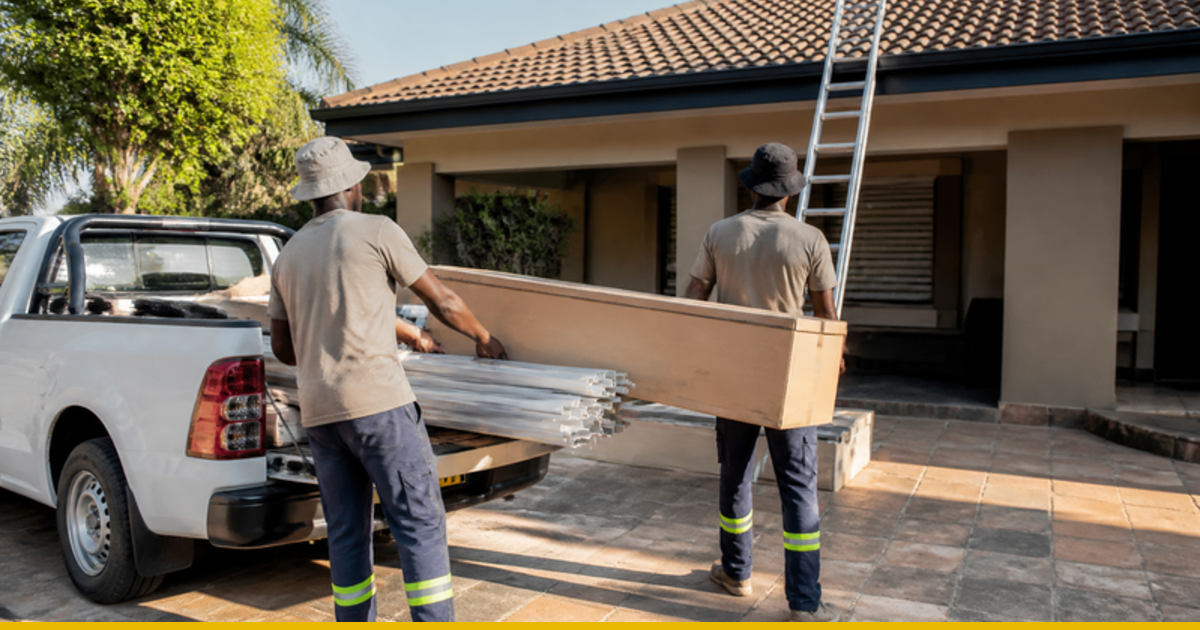
- The crew sets up ladders, safety equipment and marks out the work areas.
- Rails are fixed to the roof, using hooks under tiles or clamps on IBR sheeting, and the panels are mounted and wired.
- The inverter, battery, isolators and surge protection are mounted, usually in the garage.
- The system is connected to your DB board. Expect the power to be off for a few hours.
- The system is switched on, tested, labelled and connected to monitoring.
What should you receive at handover?
- The Certificate of Compliance covering the solar installation.
- A single-line diagram of the system.
- A list of equipment with serial numbers, and the warranties.
- Proof the registration has been submitted.
- Monitoring app login, and settings explained.
- Emergency shutdown steps, ideally on a label near the inverter.
If you're still at the planning stage, start with what size solar system you need and what a solar quote should contain.
Frequently Asked Questions
How long does installation take?
One to two days on site for most homes. The whole process, from first enquiry to switch-on, usually takes three to six weeks, mostly because of quoting, ordering and scheduling.
Do I need to be home?
Someone needs to be there to let the crew in, agree where equipment goes, and be present at handover. You don't need to be there all day.
When can I start using the system?
Usually from the day it's tested and commissioned. Some municipalities expect you not to export to the grid until registration is approved, so ask your installer how your system is set until then.
How I Can Help
These days I focus on solar for businesses and farms. If you're a homeowner, I'll gladly introduce you to a registered installer working to the CleanVolts Approved standard, who will take you through every step, from bill review to handover. The installer contracts with you directly and signs off the work. Using CleanVolts costs you nothing, and if the installer pays me a referral fee, I'll tell you up front.
Send me a message · Try the free sizing guide
Where I fit in
I plan and manage solar for businesses and farms. I start with your bills and how you really use power, then bring in a registered installer working to the CleanVolts Approved standard, who designs, installs and signs off the system under their own registration. You contract with them directly, and I stay your point of contact. If the installer pays me a referral fee, I tell you before you sign.
I've stopped adding new guides. For anything not covered here, ask my assistant and I'll answer you directly.