
Guides · Farms
Agrivoltaics: farming under solar panels in South Africa
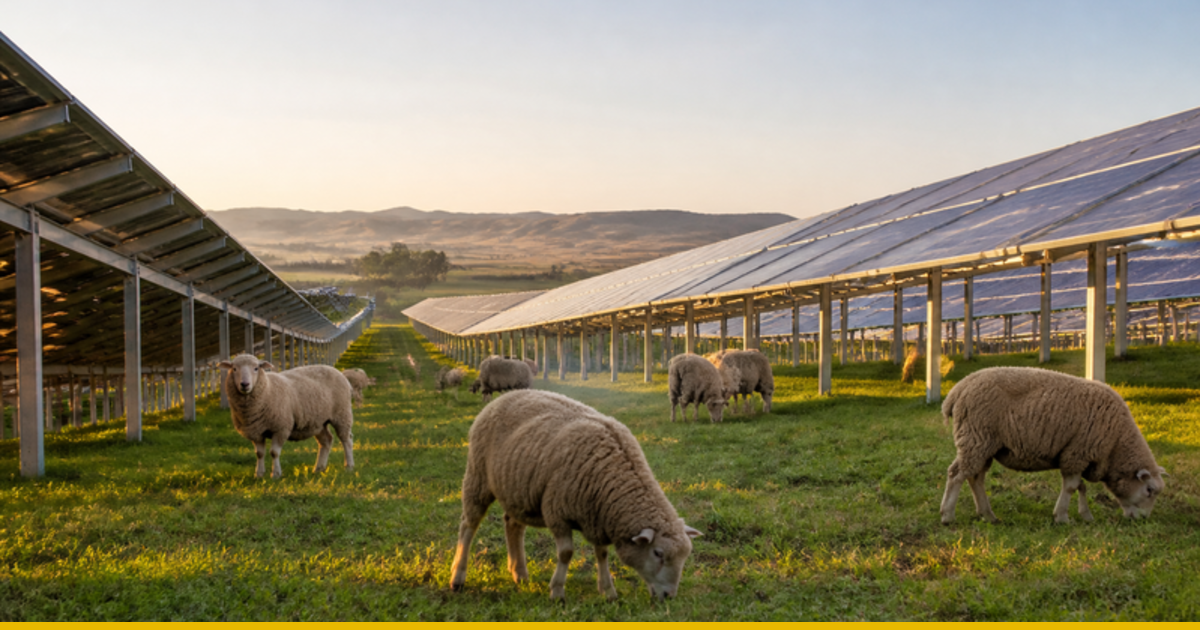
Short answer: Agrivoltaics means using the same land for solar panels and farming, for example grazing sheep under the panels or growing shade-tolerant crops between and beneath raised rows. In South Africa's hot, dry regions the partial shade can cut water loss and heat stress. It costs more than a standard ground mount, so it suits farms that would otherwise give up productive land to solar.
Last updated November 2026.
Many farms have the space for a large ground-mounted system but don't want to take good land out of production. Agrivoltaics is one answer, and an idea worth knowing if you're looking at solar for farms. This guide explains how it works and what to check before you commit.
What is agrivoltaics and does it work in South Africa?
The panels sit on frames high enough, and rows far enough apart, for animals or machinery to work underneath and between them. The land keeps producing food while the panels produce electricity. South Africa's strong sun and dry conditions suit it well: partial shade lowers soil temperature and evaporation, which can help some crops and pasture through hot summers.
Which crops grow under solar panels?
| Use | How well it works | Notes |
|---|---|---|
| Sheep grazing | Well suited | Sheep keep the grass down and use the shade. The most common approach. |
| Leafy greens and herbs | Often good | Many benefit from partial shade in hot weather. |
| Berries and some vegetables | Promising | Depends on variety and how much shade the design casts. |
| Pasture and fodder | Good | Can hold moisture better in dry spells. |
| Cattle, goats | Harder | Cattle can damage frames and cables; goats climb. Needs a much tougher design. |
| Tall field crops (maize, sunflower) | Difficult | Need full sun and large machinery access. |
Is agrivoltaics more expensive?
Yes. Higher frames, wider row spacing, stronger fixings and cable protection all add cost compared with a standard ground mount, and you fit fewer panels per hectare. The case rests on keeping the land productive, and on the electricity saving. Compare it with a standard ground mount on poorer land, or panels on shed and packhouse roofs. See solar for farms and Ruraflex and Landrate tariffs.
What should farmers check first?
- What you'll farm underneath, and what height and spacing that needs.
- Animal and machinery protection for cables, inverters and frames.
- Water and drainage: runoff from panel edges can erode soil if not managed.
- Grid connection and approvals with Eskom or your municipality for the system size.
- A trial area before committing a whole field.
Safety First
- Cables must be protected from animals and machinery, and the array fenced where needed.
- Installation must be done by a registered installer who issues a Certificate of Compliance.
Frequently Asked Questions
Which crops grow under solar panels?
Shade-tolerant crops such as leafy greens, herbs, some berries, and pasture tend to do best.
Can livestock graze under panels?
Sheep, yes. Cattle and goats need much tougher, higher designs.
Is agrivoltaics more expensive?
Yes, than a standard ground mount. The trade-off is keeping the land in production.
Where I fit in
I plan and manage solar for businesses and farms. I start with your bills and how you really use power, then bring in a registered installer working to the CleanVolts Approved standard, who designs, installs and signs off the system under their own registration. You contract with them directly, and I stay your point of contact. If the installer pays me a referral fee, I tell you before you sign.
I've stopped adding new guides. For anything not covered here, ask my assistant and I'll answer you directly.