
Guides · Farms
Solar for farms: cutting diesel and Eskom costs
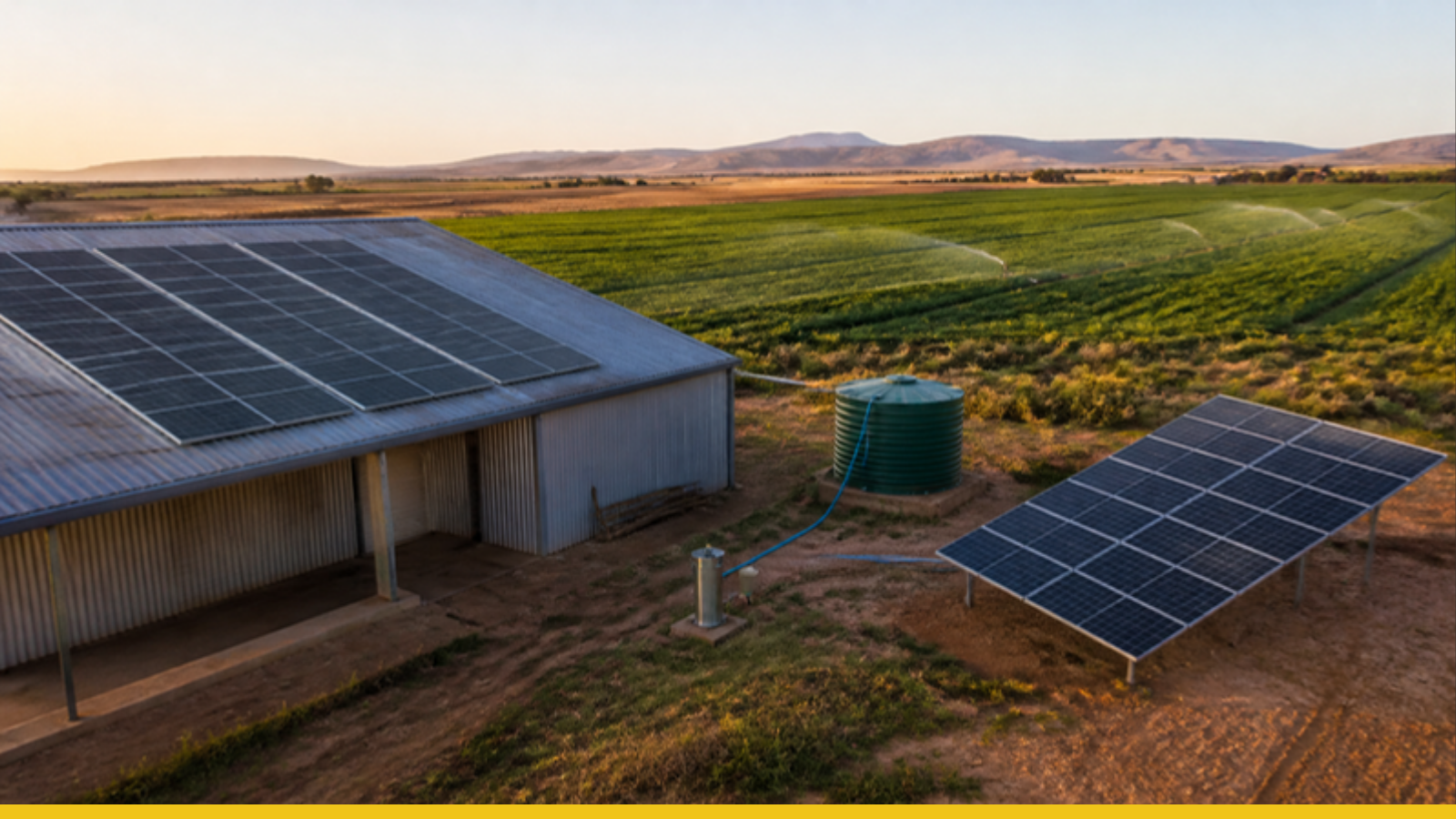
Short answer: Solar pays back fastest on a farm where power is used in daylight: borehole and irrigation pumps, cold rooms, packhouses and workshops. Pumping water into storage while the sun shines is often cheaper than storing electricity in batteries. Keep the generator as backup, let solar cut its running hours, and plan the system around 12 months of bills and fuel records rather than a rule of thumb.
Prices and rules checked October 2026.
Few businesses feel energy prices like a farm. Eskom's direct tariffs rose by an average of 8.76% on 1 April 2026, municipal tariffs by about 9% from 1 July, and NERSA has already approved a further 8.83% for April 2027. Diesel has been worse: inland wholesale 50ppm diesel went from about R19 a litre in October 2025 to almost R32 in October 2026.
This guide covers where solar earns its keep on a farm, whether you need batteries, what happens to the generator, the tax position, and what to gather before you ask anyone for a quote. If you run a commercial building rather than a farm, see my guide to solar for business.
Where does solar pay back fastest on a farm?
Solar produces most between about 10am and 3pm. The loads that pay back fastest are the ones that run, or can be moved to run, in those hours.
| Load | Why solar fits | What to watch |
|---|---|---|
| Borehole pumps | Pumping can run in daylight and fill a tank or reservoir for use at night. The water is your storage. | Pump size, depth and flow rate decide the system. A solar pump controller or drive suits most new setups. |
| Irrigation | Seasonal, heavy and mostly daytime. Large savings where pumps currently run on diesel. | Night-time irrigation schedules may need to shift, or the system needs storage. |
| Cold rooms and packhouses | Cooling demand peaks on hot, sunny days, exactly when panels produce most. | Cold rooms run around the clock, so night loads need batteries, the grid or a generator. |
| Dairy | Milk cooling and hot water are big, steady loads. | Milking happens early and late, outside peak sun, so batteries usually matter more here. |
| Workshops, offices and the farmhouse | Ordinary daytime use, and often on the same supply point as the rest of the farm. | Usually worth combining with a bigger farm system rather than doing separately. |
Poultry houses and game lodges have load patterns of their own. See my guides to solar for poultry farms and solar for game lodges.
Do I need batteries?
Not always. On many farms the cheapest storage is water. A solar-powered borehole that fills a tank during the day can supply livestock and the house overnight with no battery at all.
Batteries earn their place when important loads run at night or very early: cold rooms, milking, security lighting and the farmhouse. They also let a system ride through cloudy spells and keep essential loads going when the grid fails. Batteries are the most expensive part of most systems, so size them to the loads that genuinely need them, not to the whole farm.
Grid-tied, hybrid or off-grid?
- Grid-tied: Solar supplies the farm in daylight and the Eskom supply covers the rest. The lowest cost per unit, but no backup when the grid is down.
- Hybrid: Solar, batteries and the grid working together, usually with the generator as a last resort. The most common choice for farms with an Eskom connection.
- Off-grid: Solar, batteries and a generator, with no grid connection. Suits remote pumps and sites where a new Eskom connection would be expensive or slow.
At the top end, some large operations are going fully off-grid. A Free State farm is building a 4.89 MW ground-mounted solar array with a 20 MWh battery, sized to carry critical loads through the night and long overcast spells without diesel or Eskom. Most farms start far smaller, with the pumps and the loads that cost the most.
What happens to the generator?
Keep it. The aim is to make the generator the backup rather than the main supply. A hybrid system can start the generator automatically only when batteries run low, so it runs for hours a month instead of hours a day.
The diesel saving can be large. One Mpumalanga citrus farm was burning up to 500 litres of diesel a day in peak season after a packhouse upgrade the grid could not supply, before it moved to solar and batteries.
Can a farm claim a tax deduction for solar?
Yes, if the farm is run as a business. Section 12B of the Income Tax Act lets a business deduct 100% of the cost of qualifying solar PV in the year it is brought into use, for systems up to 1 MW. Larger systems are written off over three years. The temporary 125% deduction ended on 28 February 2025 and was not renewed.
The deduction applies to the part of the system used in the farming business, so speak to your accountant about how a farmhouse on the same system is treated.
What should I gather before getting quotes?
- Twelve months of electricity bills, including the tariff name (many farms are on Eskom's rural tariffs such as Ruraflex or Landrate).
- Generator records: fuel bought or used per month, and running hours if you log them.
- Pump details: motor size in kW, borehole depth, flow rate and how many hours each pump runs.
- Your seasonal calendar: harvest, packhouse and irrigation peaks.
- Where panels could go: shed roofs, or open ground close to the main loads.
- Your supply: single or three-phase, and the size of the Eskom connection.
With that information, an installer can design around how the farm really uses power, and you can compare quotes like for like. My guide to what a solar quote should contain explains what to look for.
What about theft?
Panels and batteries are targets on farms. Ask installers how they protect the system: anti-theft fasteners, fencing around ground mounts, lockable enclosures, alarms and cameras, and where the batteries will be housed. Tell your insurer about the system before it is switched on. My guide to insurance and solar covers the gaps to check.
What paperwork does a farm system need?
- A Certificate of Compliance (CoC) for the electrical work, issued by a registered person working for a registered electrical contractor.
- Approval from Eskom or the municipality before any system is connected to the grid.
- Registration with NERSA for larger grid-connected systems. Your installer should tell you whether this applies.
- Water-use rules if you are drilling or expanding boreholes. Check with the Department of Water and Sanitation before you drill.
Frequently Asked Questions
Can solar run a borehole pump without batteries?
Yes. Solar pumps and solar pump drives run straight from the panels in daylight and slow down or stop when the sun goes. Pair the pump with a tank or reservoir big enough for your night-time and cloudy-day needs.
How big a system does a farm need?
It depends entirely on the loads. A single remote pump may need a few panels, while a packhouse with cold rooms may need hundreds. Start from your bills, fuel records and pump details, not a standard package.
Can a farm rent solar instead of buying it?
Yes. Some providers offer business solar on a monthly fee or a pay-per-unit agreement, with no upfront capital. Buying usually works out cheaper over the life of the system, but renting keeps cash free for the rest of the farm.
Where I fit in
I plan and manage solar for businesses and farms. I start with your bills and how you really use power, then bring in a registered installer working to the CleanVolts Approved standard, who designs, installs and signs off the system under their own registration. You contract with them directly, and I stay your point of contact. If the installer pays me a referral fee, I tell you before you sign.
Sources: Eskom on the 2026/27 tariff decision; Engineering News on the 2027/28 increase; BusinessTech on October 2026 fuel prices; Engineering News on the Belle Rive Farm project; FreshPlaza on Namoneng Farm; Section 12B overview.
I've stopped adding new guides. For anything not covered here, ask my assistant and I'll answer you directly.