Guides · Compliance
Update: one week after we got solar installed
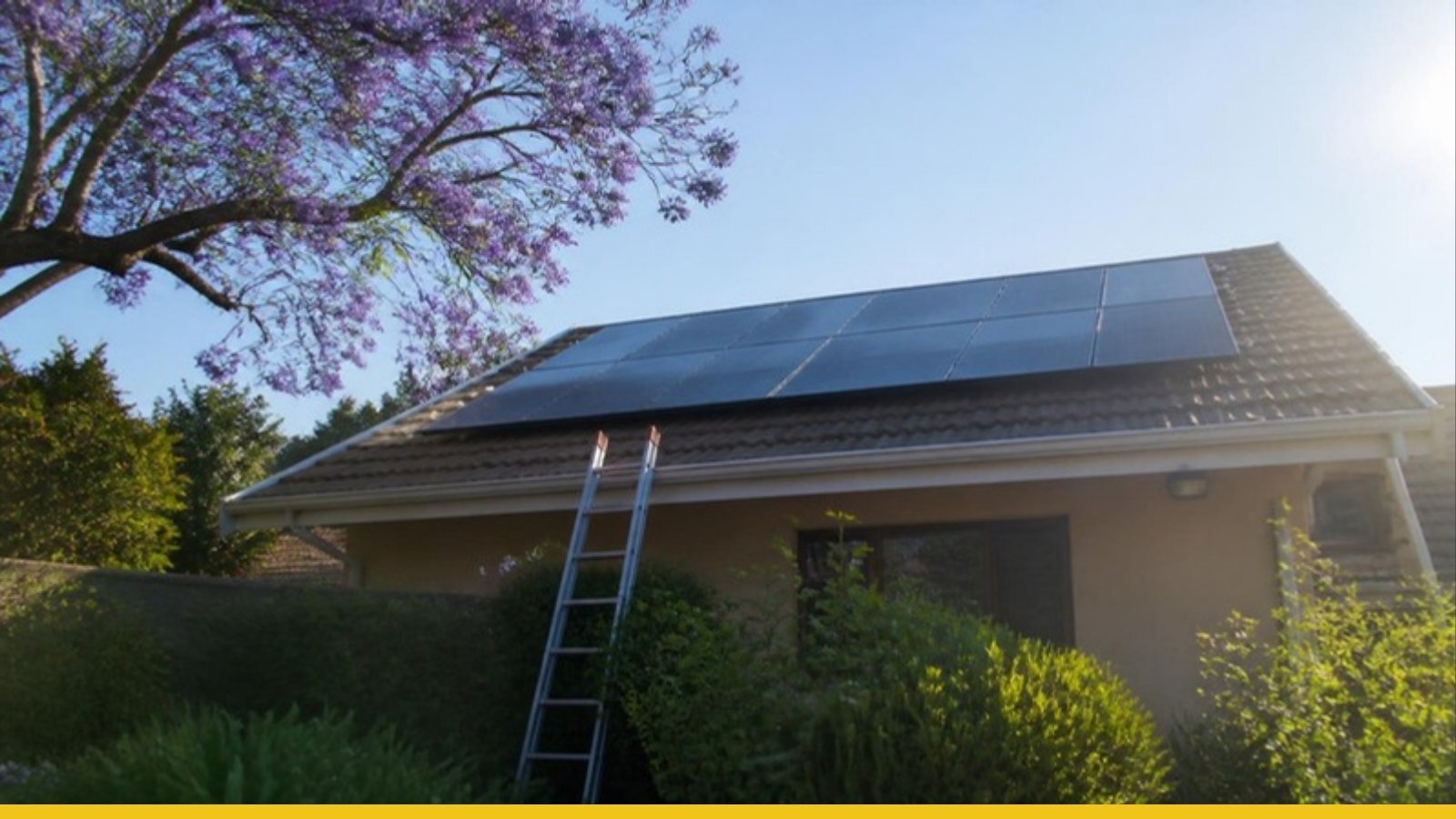
EDIT: This post was originally posted on 2 October, 2022. It was shared by renowned journalist Hopewell Chin’ono, and that changed my life. For that I am forever grateful.
Note: some of this is out of date. This is our story from 2022, kept as it was written. Since then load shedding has largely ended, and City Power now pays an export credit to registered systems, so the feed-in point below no longer applies. For how things work today, see SSEG registration in Johannesburg and what your solar system is for now.
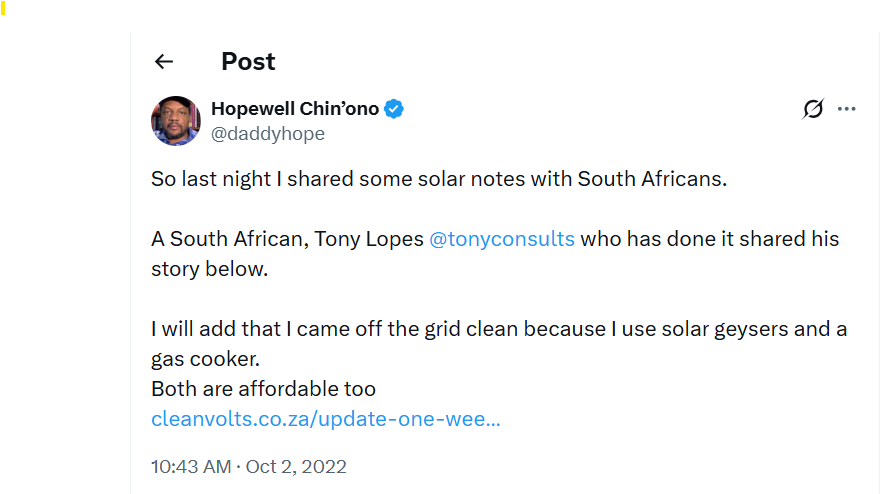
Here's the original tweet: https://x.com/daddyhope/status/1576493125354127363
The original article:
We finally got solar installed and said goodbye to loadshedding.
The delay was with getting finance from the banks. Switching home loan from Standard Bank to FNB was very difficult due to the extremely poor support we got from Standard Bank.
Initially we wanted to increase our bond with Standard Bank in order to pay for the solar, but they couldn’t even tell us how much extra we would need to pay on our bond repayments.
They also wouldn’t tell us how much the bond cancellation fees would cost. It was a nightmare but after about 6 months we were able to switch to FNB which was a GREAT decision.
We increased our bond amount with FNB and used that to pay for our solar installation.
So now that we have solar, what did we experience in the past week?
We have literally not experienced a single power outage and we’ve said goodbye to loadshedding.
Our monthly bill with Eskom is forecast to be reduced from R2,500 per month to R390 per month. We are now spending R13 per day on electricity from Eskom.
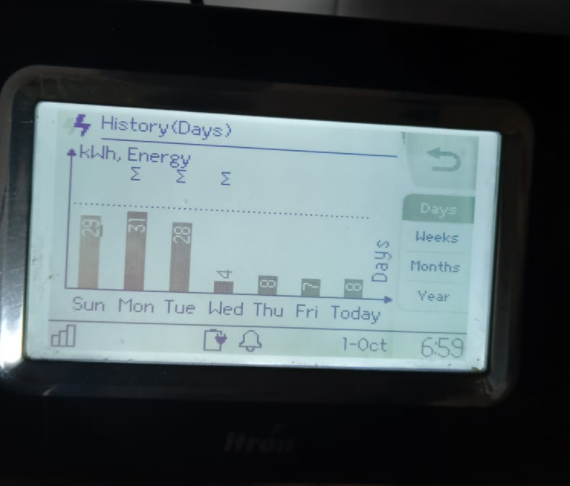
Our prepaid meter shows that our electricity bill drops to R13 per day.
Why are we still buying electricity from Eskom?
We shower in the morning and at night. We have 3 geysers and we use some Eskom power to heat up the geysers when the sun isn’t shining.
We’re looking at solar geysers (using heat, not electricity) in the future and we’re also going to adjust the timing on one of the geysers to not switch on at 4am in time for a 6am shower. The water in the geyser actually stays warm for about 24 hours so we don’t need that extra energy consumption.
We have become obsessed with becoming more energy efficient. Now we plan when we do laundry or cook because we can see exactly when our battery gets drained. This is a good thing when you live in a country with an energy crisis.
We have FAR more power coming from the solar panels than what we can use. We would love to feed this into the grid but the City of Johannesburg doesn’t have a feed-in tariff for residential (unlike City of Cape Town which does). This means we would be better off storing the energy for our own needs or finding a way of sharing it with our neighbours.
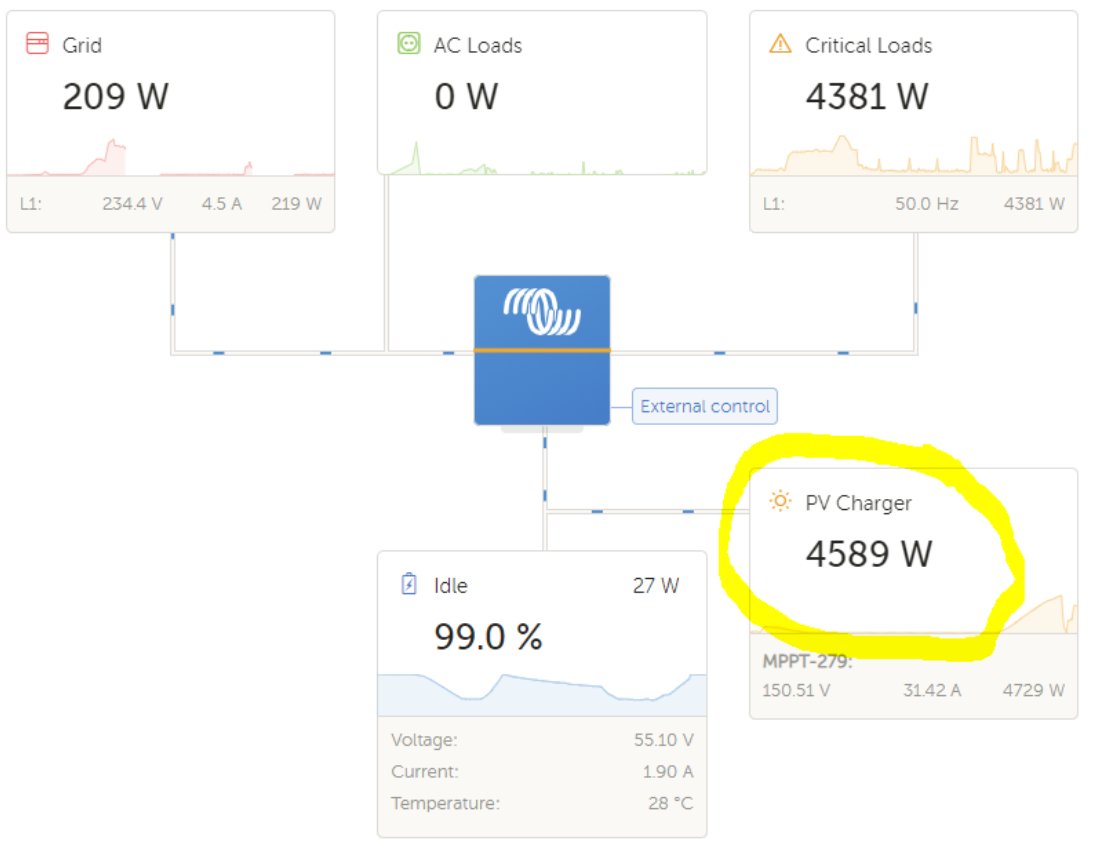
Surplus energy from the sun
Our battery is fully charged by the sun by 09h30. After that the solar panels go into idle mode because there’s nowhere for them to send the energy to. We are going to have to invest in more batteries to store our surplus energy.
If the government could simply change policies and allow residential solar generation to feed into the grid with a feed-in tariff it would make help with our energy woes as a country. Botswana does this. Why can’t South Africa? I think we all know why…
We don’t know when there is loadshedding and we have to check the Eishkom app. When we come home at night during loadshedding we are one of the only houses in the street with electricity. The others have generators which cost an arm and a leg to run with the fuel costs.
Our electric fence, beams, gate motor and alarm system are fully functional at all times because load shedding doesn’t happen to us anymore.
I have become a solar power nerd. My wife is going nuts with me constantly updating her about how much power the sun gave us today, what percentage the battery is charged and how little power we used from the grid.
Conclusion: was getting solar a good idea?
Yes.
We have added value to our property.
We no longer have loadshedding or power cuts at our house.
The extra we have to pay on our bond from getting solar is more than off-set by the money we save on our electricity bill.
We can work online more often from our house without needing to find a coffee shop with free WIFI and a generator during load shedding.
We save money on data since the fibre still works during loadshedding and our WiFi is constantly up.
It’s a no brainer. I wish our esteemed government would catch a wake-up and promote solar, but you can’t get a kickback from the Sun I guess.
How I Can Help
These days I focus on solar for businesses and farms. If you're a homeowner, I'll gladly introduce you to a registered installer working to the CleanVolts Approved standard, who will look at solar for your own home in your area. The installer contracts with you directly and signs off the work. Using CleanVolts costs you nothing, and if the installer pays me a referral fee, I'll tell you up front.
Send me a message, email tony@cleanvolts.co.za or WhatsApp 072 368 2960.
Where I fit in
I plan and manage solar for businesses and farms. I start with your bills and how you really use power, then bring in a registered installer working to the CleanVolts Approved standard, who designs, installs and signs off the system under their own registration. You contract with them directly, and I stay your point of contact. If the installer pays me a referral fee, I tell you before you sign.
I've stopped adding new guides. For anything not covered here, ask my assistant and I'll answer you directly.