
Guides · Existing systems
Hail damage on solar panels: what to do after a storm
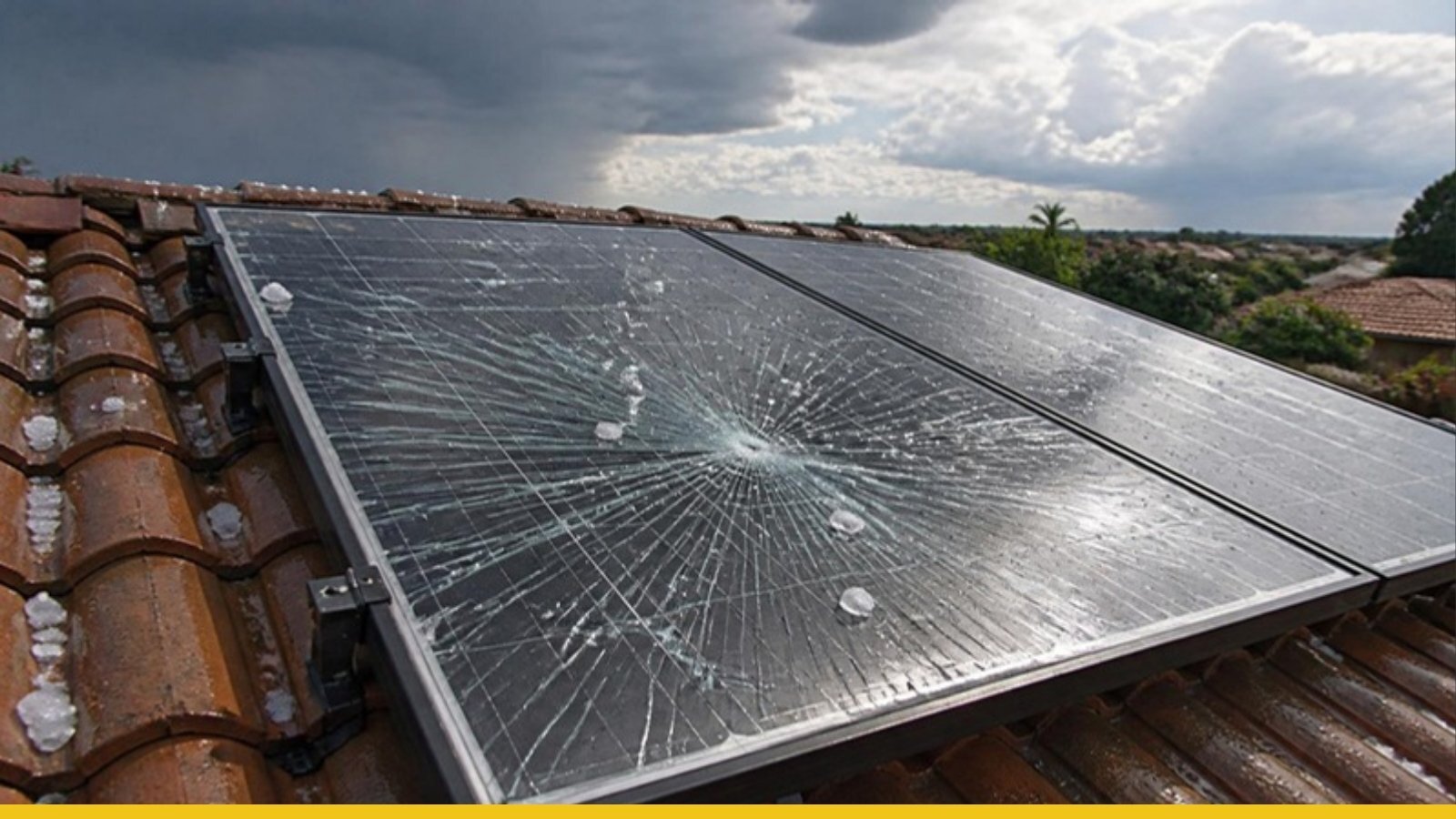
Short answer: If hail has cracked your solar panels, stay off the roof and shut the system down using the procedure in your inverter manual. Photograph the damage from the ground, tell your insurer, and have a registered electrical contractor test the system before you use it again. A cracked panel can keep producing power, which is exactly what makes it a shock and fire risk.
Gauteng's storm season runs through summer, and hail is the one thing that can damage a well-installed system overnight. When a big storm hit Joburg in November 2023, solar panels were among the items most often reported damaged. Here's what to do in the first 24 hours, how to handle the insurance claim, and how to get your system checked and repaired after storm damage.
Safety first
- Don't climb onto the roof. Wet roofs are slippery, and damaged panels can expose live parts.
- Don't touch panels, cables or connectors. Panels produce DC electricity whenever there's daylight. You can't switch that off at the panel itself.
- If you smell burning, hear crackling or see smoke, stay clear and call for help.
What Hail Does to a Solar System
Solar panels are tougher than they look. Panels certified to the international standard IEC 61215 are tested with ice balls of 25 mm hitting at about 23 metres a second. Hail bigger than a R5 coin goes beyond that test, and Highveld storms produce it.
When hail does get through, the damage usually falls into one of these:
- Shattered or cracked glass. Easy to see, often looking like a spider web across the panel.
- Microcracks in the cells. Invisible from the ground. The glass can look fine while the cells underneath are damaged, and output drops over the following weeks.
- Damaged frames, mounting or cables. Bent frames, loosened clamps or cables knocked out of their clips.
- Water getting in. Once the glass or backing is broken, rain gets into the panel and its connections.
The inverter and battery are usually indoors and unaffected by the hail itself. Storms often bring lightning too, though, so check the inverter app for faults as well.
The First 24 Hours
- Look from the ground. Once the storm has passed, check the panels from the garden, a neighbour's window or with binoculars. Look for cracks, chips, broken glass and anything hanging loose.
- Photograph everything. Take photos of the panels from the ground, any hailstones on the ground (with something for scale), and other storm damage to the house or cars. Note the date and time.
- Check the app. Compare today's production with a similar clear day before the storm. A sudden drop, a missing string or a new fault code points to damage even if you can't see it. My guide to checking whether your system is underperforming shows what to compare.
- Shut the system down if you see damage. Follow the shutdown procedure in your inverter manual or on the label next to it. This stops the inverter using power from damaged panels. It does not make the panels themselves safe to touch.
- Tell your insurer. Report the damage as soon as you can. Many policies set a time limit for claims, often around 30 days.
- Get the system inspected. A registered electrical contractor should test the panels and wiring before the system goes back into use.
Why a Cracked Panel Is Still a Risk
A cracked panel doesn't simply stop working. It keeps producing DC electricity in daylight, often at close to full voltage. Water then gets into the cracks, and over time that can cause earth faults, overheating at damaged cells and burnt connectors. That's why "it still works" isn't a reason to leave it.
Damaged panels also drag down the panels wired with them. One bad panel in a string can cut the output of the whole string.
Making the Insurance Claim
Roof-mounted panels are usually treated as part of the building, so they normally fall under your buildings (homeowner's) policy. Check with your broker how your inverter and battery are covered, as insurers handle these differently.
Claims are most often reduced or rejected because:
- The insurer was never told about the solar system, or the sum insured wasn't increased to include it.
- Storm damage isn't covered under the policy, or there's an exclusion.
- The damage looks like wear and tear rather than storm damage.
- Paperwork is missing. Insurers may ask for the installation's Certificate of Compliance. If you don't have one, read my guide on what to do when there's no CoC.
To give your claim the best chance, send your photos, the date and time of the storm, the original installation invoice, and an inspection report from a registered contractor describing the damage.
Getting It Repaired
- Match the replacement panels. New panels need to be electrically compatible with the rest of the string. The same model is ideal. A close match is often fine, but it needs checking.
- Check the mounting while the panels are off. It's the cheapest time to fix loose clamps, damaged cables and roof leaks under the array.
- Get the paperwork updated. Any change to the installation should be inspected and covered by a CoC.
- Watch the output afterwards. Compare production for a few weeks after the repair. Hidden microcracks in panels that weren't replaced can show up later. Remote monitoring makes this easy.
Frequently Asked Questions
Are solar panels hail resistant?
Certified panels handle normal hail well: the IEC 61215 test uses 25 mm ice balls. Large hail of the kind Highveld storms sometimes produce can still crack them, so insurance matters.
Does home insurance cover hail damage to solar panels?
Usually, under buildings cover, if your insurer knows about the system, the sum insured includes it and storm damage is a covered event. Check your policy wording and ask your broker before storm season.
Can I keep using a cracked panel?
No. It may still produce power, but water getting into the cracks can cause earth faults and overheating. Have it tested and replaced.
How I Can Help
These days I focus on solar for businesses and farms. If you're a homeowner, I'll gladly introduce you to a registered installer working to the CleanVolts Approved standard, who will assess the storm damage, document it for your insurer and quote the repair. The installer contracts with you directly and signs off the work. Using CleanVolts costs you nothing, and if the installer pays me a referral fee, I'll tell you up front.
Request a repair assessment · Free checklist: is your solar legal and safe?
Where I fit in
I plan and manage solar for businesses and farms. I start with your bills and how you really use power, then bring in a registered installer working to the CleanVolts Approved standard, who designs, installs and signs off the system under their own registration. You contract with them directly, and I stay your point of contact. If the installer pays me a referral fee, I tell you before you sign.
I've stopped adding new guides. For anything not covered here, ask my assistant and I'll answer you directly.