
Guides · Business
Commercial solar maintenance (O&M): what it should cover
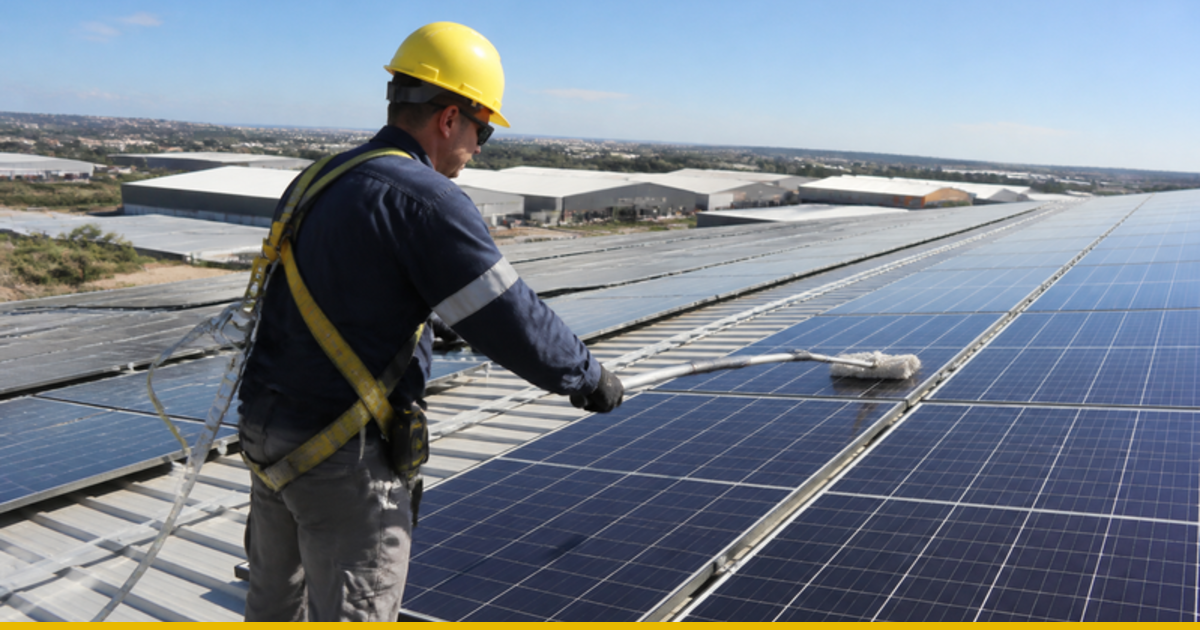
Short answer: A commercial solar maintenance (O&M) contract should cover remote monitoring with alerts, scheduled inspections and thermal scans, panel cleaning, inverter and battery checks, and a set response time for faults. Regular reports and an agreed performance benchmark protect the savings the system was bought for. Budget roughly 1% of the system's cost a year.
Last updated November 2026.
A commercial solar system's payback is calculated on it producing a certain number of units every year. A dirty array, a tripped string or an inverter fault that nobody notices for three months quietly eats into that. Operations and maintenance, usually called O&M, is what keeps the system earning. This guide covers what a good O&M contract includes, how often each task should happen, and the questions to ask before you sign. For the bigger picture, see commercial and industrial solar.
What should a commercial solar maintenance contract cover?
| Task | Typical frequency | What it catches |
|---|---|---|
| Remote monitoring with alerts | Continuous, reviewed at least weekly | Inverter faults, dead strings, communication loss, sudden output drops |
| Visual inspection of panels, mounts and cabling | Every six to twelve months | Cracked panels, loose clamps, damaged cables, roof leaks around mounts |
| Thermal imaging scan | Yearly | Hot spots in panels, connectors and isolators before they fail or burn |
| Panel cleaning | Two to four times a year, more in dusty or industrial areas | Lost output from dust, soot and bird droppings |
| Inverter checks | Every six to twelve months | Blocked ventilation, error logs, firmware updates, failing fans |
| Electrical tests (insulation, earthing, torque on terminals) | Yearly | Insulation faults, loose terminals, earthing problems |
| Battery checks , if fitted | Every six months | Cell imbalance, temperature problems, settings that shorten battery life |
| Performance report | Monthly or quarterly | Production against the expected figure, downtime, faults fixed |
What contract terms matter most?
- Response time. How quickly will someone respond to a critical fault, and how quickly will they be on site? Remote diagnosis within a day and a site visit within a few working days is a reasonable starting point to discuss.
- A performance benchmark. Agree how expected production is calculated, allowing for weather, so a shortfall can be measured instead of argued about.
- What's included and what's extra. Labour, travel, cleaning, spares and replacement parts are often treated differently.
- Warranty handling. Who logs and manages claims with the manufacturers, and who pays for the labour on a warranty swap.
- Access and safety. Working at heights, roof access and isolation procedures on your site.
- Reporting format. A simple monthly report you can actually read beats a dashboard nobody opens.
What does O&M cost?
A common budgeting rule is about 1% of the system's installed cost a year, depending on size, location and what's included. For a R1.1 million system, that's around R11,000 a year. Cleaning is usually the largest variable, because it depends on how dusty your site is and how hard the roof is to reach. Batteries and remote sites cost more to maintain.
Set that against what an unnoticed fault costs. If one string of a 100 kWp system is down for three months, that can be around 10% of the system's output for a quarter. At R2.50 a unit, that's roughly R9,000 in lost savings, close to a year of O&M. My guide to commercial solar payback shows how maintenance fits into the numbers.
Who is responsible when output drops?
That depends on how you pay for the system. If you own it, you are, through whoever you contract for O&M. Under a power purchase agreement or rental, the provider usually maintains the system, because its income depends on the system producing. My guide to solar PPAs vs buying covers who carries that risk.
Either way, monitoring is the early warning. Output that drops slowly over months usually means dirt or degradation. A sudden drop usually means a fault. My guide to remote monitoring explains what to watch.
Safety First
- Don't let staff clean or work on the array themselves. Rooftop work needs fall protection, and panels carry dangerous DC voltage in daylight.
- Electrical testing and repairs must be done by registered, competent people, with records kept.
- Don't clean with harsh chemicals or high-pressure jets , which can damage panels and void warranties.
Frequently Asked Questions
How often should commercial panels be cleaned?
Two to four times a year is common in Gauteng, and more often near mines, quarries, busy roads or farmland. Let monitoring guide it: if output drops steadily between rains, it's time to clean.
What does O&M cost?
A common rule of thumb is about 1% of the installed cost a year. Remote sites, batteries and hard-to-reach roofs push it higher. Check exactly what's included before comparing prices.
Who is responsible when output drops?
If you own the system, you are, through your O&M contractor. Under a PPA or rental, the provider usually is. A performance benchmark in the contract makes a shortfall measurable.
Where I fit in
I plan and manage solar for businesses and farms. I start with your bills and how you really use power, then bring in a registered installer working to the CleanVolts Approved standard, who designs, installs and signs off the system under their own registration. You contract with them directly, and I stay your point of contact. If the installer pays me a referral fee, I tell you before you sign.
I've stopped adding new guides. For anything not covered here, ask my assistant and I'll answer you directly.