
Guides · Planning
City Power tariffs 2026/27: what the 8.63% increase means for solar homes
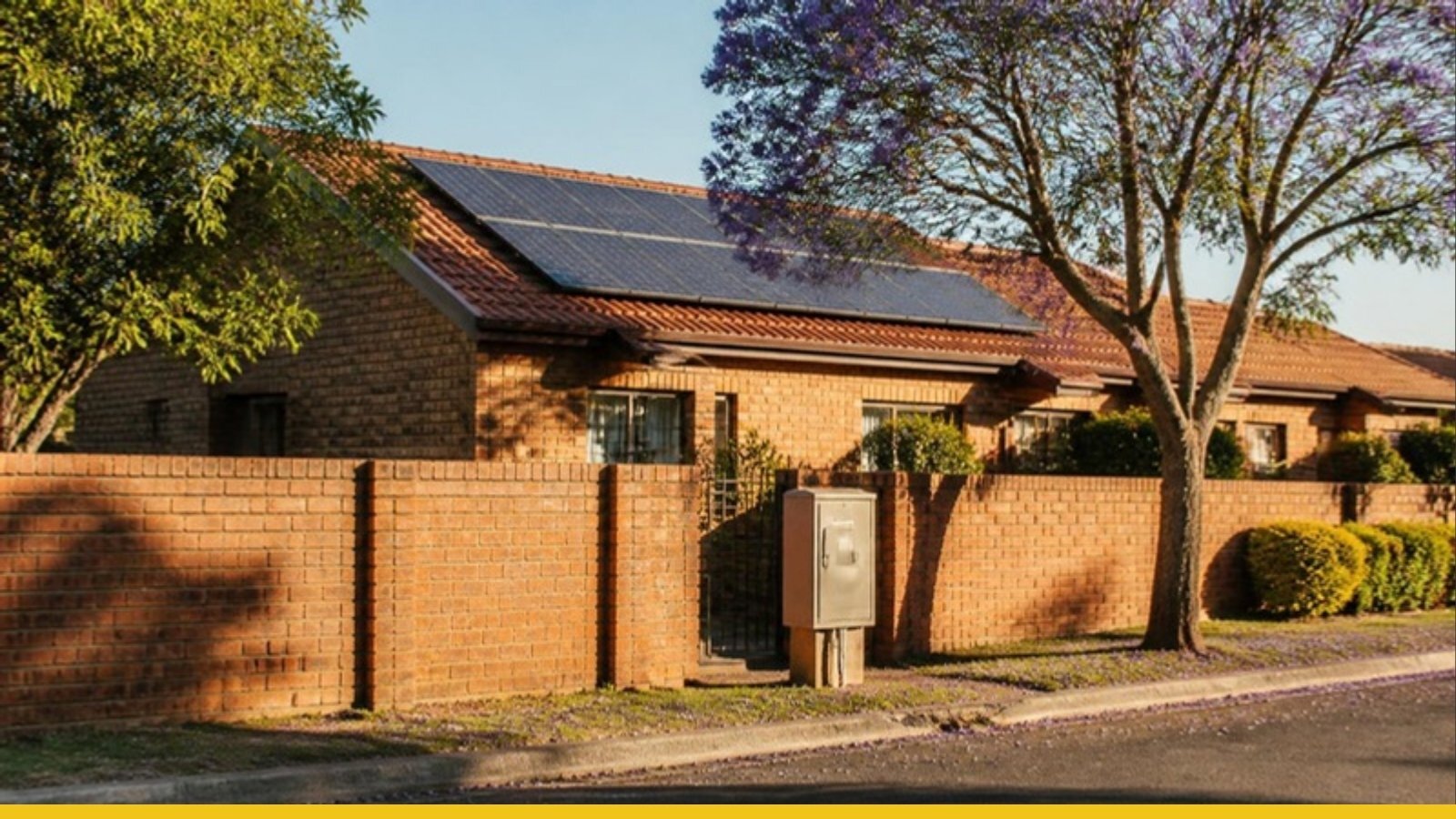
Short answer: City Power's electricity prices went up 8.63% on 1 July 2026, after NERSA approved the 2026/27 tariffs. On a R3,000 monthly bill that's roughly R260 more a month, or about R3,100 a year. Solar homes feel it less, because every kWh your panels supply replaces a kWh you would have bought at your most expensive rate.
Here's what changed, what it adds to a typical Joburg bill, and how to make sure your solar system is set up to save as much as it can. If your system was set up for load shedding, my tariff re-optimisation service exists for exactly this.
What Changed on 1 July 2026
- The increase: 8.63% on City Power tariffs for the 2026/27 financial year.
- Why: City Power buys its electricity from Eskom, whose bulk price to municipalities went up by about 9%.
- Fixed charges still apply. Most households pay a fixed monthly charge on top of what they use, whether or not they have solar.
For a sense of the new energy rates, these are the published figures for the Residential Prepaid High tariff, including VAT:
| Monthly use | Approximate rate per kWh |
|---|---|
| First 350 kWh | About R3.34 |
| 350 to 500 kWh | About R3.80 |
| Above 500 kWh | About R4.37 |
| Fixed monthly charge | About R241.50 |
Rates differ for postpaid and other tariff categories, so check City Power's official tariff schedule for yours. Rates checked October 2026.
What the Increase Adds to a Typical Bill
| Monthly bill before July | Extra per month | Extra per year |
|---|---|---|
| R1,500 | About R130 | About R1,550 |
| R3,000 | About R260 | About R3,100 |
| R5,000 | About R430 | About R5,200 |
These figures apply the 8.63% headline increase to the whole bill. Your exact change depends on your tariff and how your use splits across the blocks.
Why Solar Saves You Money at Your Most Expensive Rate
City Power charges more per kWh the more you use in a month. That has a useful side effect for solar homes: the kWh your panels supply come off the top of your bill, where the rate is highest.
A worked example. A household uses 900 kWh a month. A 5 kW solar system supplies about 600 kWh of that, so the household now buys 300 kWh from City Power.
- The 400 kWh above 500 kWh no longer get bought, saving about R1,750 at R4.37 each.
- The 150 kWh between 350 and 500 kWh no longer get bought, saving about R570 at R3.80 each.
- 50 kWh of the first block no longer get bought, saving about R170.
That's roughly R2,490 a month off the energy part of the bill at the new rates. The fixed charge stays. The real number depends on how much of the solar the household actually uses itself, which is where settings and timing come in.
Three Things Solar Homes Should Check Now
1. Are You Using Your Solar When It's Produced?
Every kWh you use directly from your panels is worth the full rate. Moving the geyser, pool pump, washing and dishwasher into the middle of the day costs nothing. My guide to load shifting shows how.
2. Are Your Settings Still Set for Load Shedding?
Many systems still keep the battery topped up for outages that no longer come, sometimes charging it from the grid. That made sense in 2023. In 2026 it often costs money. Read what your solar system is for now.
3. Is Your System Registered, and Do You Know What That Does to Your Bill?
Registering a solar system with City Power is a legal requirement, and it can move you from prepaid to postpaid with higher fixed charges. City Power and the solar industry body SAPVIA have been discussing changes to this during 2026, but nothing had been decided at the time of writing. My guide to SSEG registration in Johannesburg explains the process.
Frequently Asked Questions
When do City Power tariffs change next?
Municipal tariffs change on 1 July each year, after NERSA approves them. The next change is due on 1 July 2027.
Do fixed charges still apply to solar homes?
Yes. Solar reduces the energy you buy, not the fixed monthly charge. Registered systems on postpaid tariffs can pay higher fixed charges than prepaid customers.
How much does solar save after the increase?
It depends on system size and how much of the solar you use yourself. As the worked example shows, a household that uses most of its solar can cut its energy bill by more than half.
How I Can Help
These days I focus on solar for businesses and farms. If you're a homeowner, I'll gladly introduce you to a registered installer working to the CleanVolts Approved standard, who will re-set your system's settings and timing for your tariff to cut your bill. The installer contracts with you directly and signs off the work. Using CleanVolts costs you nothing, and if the installer pays me a referral fee, I'll tell you up front.
See tariff re-optimisation · New to solar? What solar costs in 2026
Sources:Business Day, 1 July 2026;EnergyBee metro tariff comparison;IOL Business Report, 22 April 2026.
Where I fit in
I plan and manage solar for businesses and farms. I start with your bills and how you really use power, then bring in a registered installer working to the CleanVolts Approved standard, who designs, installs and signs off the system under their own registration. You contract with them directly, and I stay your point of contact. If the installer pays me a referral fee, I tell you before you sign.
I've stopped adding new guides. For anything not covered here, ask my assistant and I'll answer you directly.